



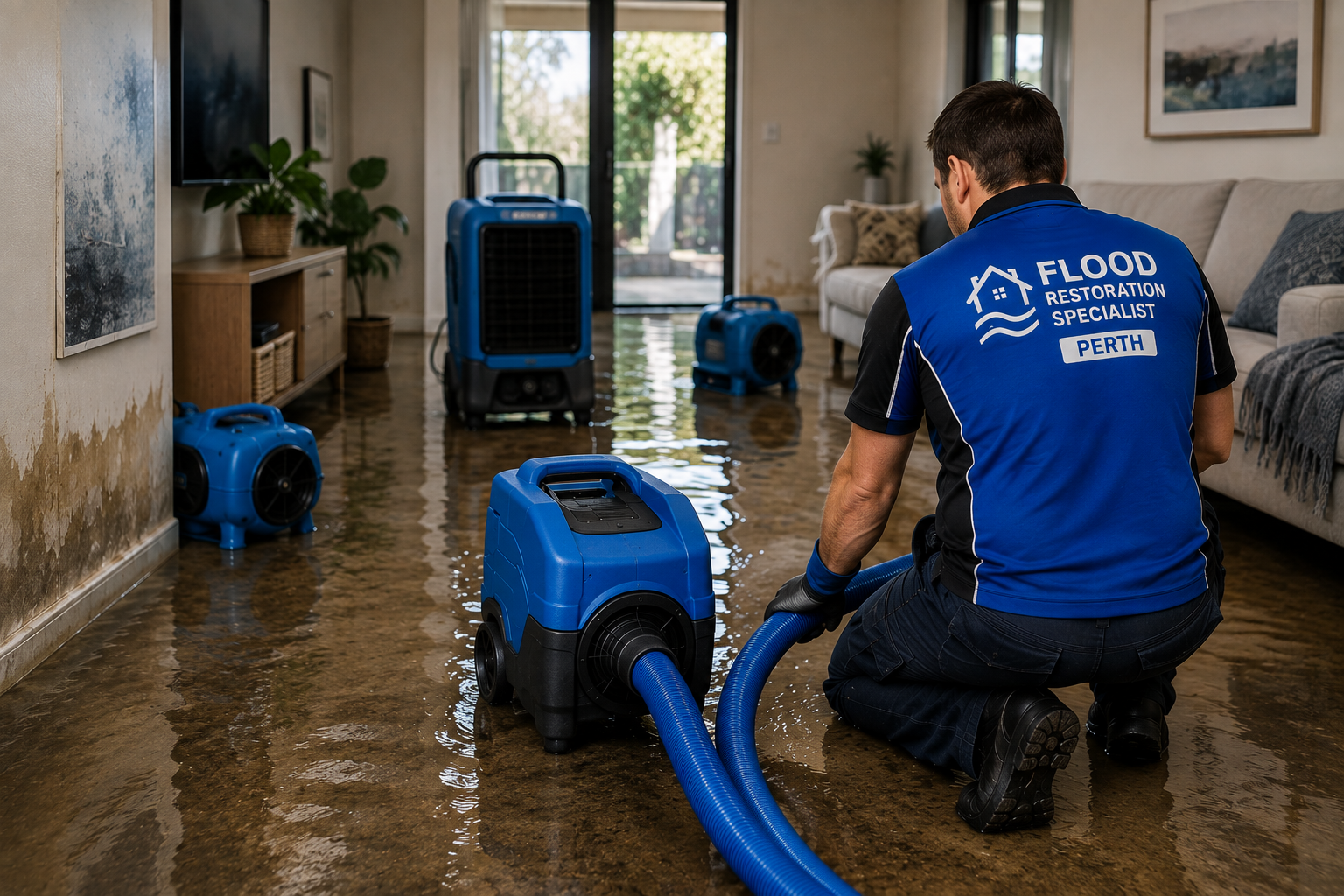
For property owners in Perth, understanding what to do immediately after water enters a building can make the flood restoration process faster, safer, and more effective.
Why Immediate Flood Restoration Matters
Water can spread quickly through floors, walls, ceilings, furniture, and other structural materials. The longer moisture remains inside a property, the greater the risk of permanent damage, unpleasant odours, and mould growth.
Professional flood restoration involves more than simply removing visible water. A proper restoration process may include water extraction, drying, cleaning, sanitisation, moisture assessment, and restoration of affected areas.
At Flood Restoration Specialist Perth, professional equipment and industry-approved restoration techniques are used to help minimise further property damage and restore affected areas efficiently.
Common Causes of Water Damage in Perth Properties
Flooding and water damage can occur for many different reasons. Some common causes include:
- Heavy rainfall and storm flooding
- Burst or damaged water pipes
- Roof leaks
- Blocked or overflowing gutters
- Washing machine or dishwasher leaks
- Hot water system failures
- Bathroom and plumbing leaks
- Appliance overflows
- Groundwater entering the property
Identifying the source of the water is an important first step. If the source is still active, it should be stopped safely before restoration work begins.
What Should You Do Immediately After a Flood?
1. Put Safety First
Do not enter a flooded area if there is a risk of electrical hazards, structural damage, contaminated water, or unstable flooring.
If it is safe to do so, switch off the electricity to affected areas. However, never touch electrical equipment while standing in water.
2. Stop the Source of Water
If the flooding is caused by a burst pipe, leaking appliance, or plumbing problem, stop the water supply if it can be done safely.
For storm or external flooding, the water source may not be controllable. In these situations, professional assistance may be required as soon as possible.
3. Remove Standing Water Quickly
Standing water can continue to damage flooring, walls, furniture, and other materials.
Professional water extraction equipment can remove large amounts of water much faster than ordinary household methods. Rapid extraction can also make the subsequent drying process more effective.
4. Move Valuable Items to a Dry Area
If it is safe to enter the property, move important documents, electronics, furniture, and other valuable belongings away from affected areas.
Avoid moving heavy or electrical items if doing so could create a safety risk.
5. Start Professional Drying
Removing visible water does not mean the property is completely dry.
Moisture can remain underneath flooring, inside walls, beneath cabinets, and in other difficult-to-reach areas. Professional drying systems, dehumidifiers, and moisture assessment equipment can help identify and remove hidden moisture.
Why Structural Drying Is Important
One of the most important stages of water damage restoration is structural drying.
Walls, floors, ceilings, timber, insulation, and other building materials can absorb water. If moisture remains trapped inside these materials, it may contribute to further deterioration and mould growth.
Professional restoration teams use specialised drying equipment to help reduce moisture levels and return affected areas to appropriate dry conditions.
The Risk of Mould After Water Damage
Mould can become a concern when moisture is not removed properly.
Floodwater and excessive indoor humidity can create favourable conditions for mould growth. Mould may cause unpleasant smells and can damage building materials and belongings.
This is why flood restoration should focus on both visible water removal and hidden moisture.
If mould is already present, professional mould remediation may be necessary to address the affected areas properly.
Flood Damage Restoration vs. Water Damage Restoration
Although the terms are often used interchangeably, the cause and type of water damage can vary significantly.
Flood damage restoration generally involves restoring a property after significant flooding caused by events such as storms or external water entering the building.
Water damage restoration can involve many other incidents, including burst pipes, plumbing leaks, roof leaks, and appliance failures.
The appropriate restoration approach depends on the source, amount, and extent of the water damage.
How Professional Flood Restoration Works
A professional restoration process typically follows several stages.
Initial Inspection
The property is inspected to determine the extent and potential causes of the damage.
Water Extraction
Standing water is removed using professional extraction equipment.
Drying and Dehumidification
Air movement and dehumidification equipment are used to remove remaining moisture from affected areas and materials.
Cleaning and Sanitisation
Affected surfaces and belongings may require cleaning and sanitisation depending on the type and source of the water.
Restoration
Damaged areas are assessed and restored as required so the property can return to a safe and usable condition.
Can Flood Damage Affect Your Insurance Claim?
Flood damage can sometimes involve insurance claims, depending on your policy and the circumstances of the incident.
It is important to document the damage with photographs and videos where it is safe to do so. Keep records of damaged belongings, restoration work, invoices, and relevant communications with your insurer.
A professional restoration company can also help make the restoration process easier by communicating with property owners and, where applicable, insurance providers.
Always check the specific terms and conditions of your insurance policy.
Why Choose Professional Flood Restoration in Perth?
Trying to handle extensive water damage without professional equipment can leave hidden moisture behind.
A professional flood restoration service can provide:
- Rapid emergency response
- Professional water extraction
- Structural drying
- Moisture assessment
- Cleaning and sanitisation
- Mould remediation
- Restoration support
- Assistance with the insurance process
Flood Restoration Specialist Perth provides emergency flood and water damage restoration services throughout Perth, with a focus on rapid response and professional restoration techniques.
Don't Wait When Your Property Has Water Damage
The longer water remains inside a property, the more difficult the restoration process can become. Acting quickly can help limit damage to floors, walls, furniture, and other building materials.
If your Perth property has experienced flooding, a burst pipe, roof leak, or another water-related emergency, professional assessment and water extraction should be arranged as soon as it is safe to do so.
Need Emergency Flood Restoration in Perth?
Flood Restoration Specialist Perth provides 24/7 emergency flood and water damage restoration services designed to help homeowners and businesses recover from unexpected water damage.
Contact the team as soon as possible after a flood or major water incident to arrange an assessment and begin the restoration process.